
Kuma Masahiro’s SINGLE CULTIVAR Tencha

About Tencha:
Tencha is a rare tea to find in its leaf form. It is grown the same as gyokuro - indirectly shaded from sunlight for 3-4 weeks before harvest, then steamed immediately and dried. The final drying process is done in a special oven called a tencharo. Instead of being rolled, tencha is de-stemmed and de-veined, leaving small flakes of the tea leaves. In the case of quality tea, these flakes are then put into a stone mill and slowly stone ground in chilled rooms to reduce oxidation. This is how good quality matcha is grown and processed! The vast majority of tencha is ground into matcha so not many people know where matcha actually comes from! The colour of the leaf flakes is deep blue green which is a good sign that the leaves have been shaded before harvest, as the tea plant will over produce chlorophyll during the stressful shading time, and the leaves will even stretch out to increase their surface area in an attempt to catch as much light as possible. Each cultivar has its own shade of green, so even given the same growing conditions, some cultivars will be more green than others.
About Matcha:
Matcha in kanji means ground tea, but doesn’t specify exactly which tea leaves are used - the large majority of high grade matcha is ground from tencha, though occasionally gyokuro (the king of Japanese teas) may be used. Tencha and gyokuro are grown in relatively the same way; covered from the sun and grown in varying amounts of shade for the last 16-30 days prior to harvest. This covering blocks direct sunlight and interrupts photosynthesis, stressing the plant and changing the flavour of the tea as the amino acids inside the tea leaves are prevented from changing into catechins, resulting in a higher level of amino acids (which give umami flavour and sweetness) in shaded tea compared to unshaded tea. The difference between tencha and gyokuro is after being steamed and dried there is no need for tencha to be rolled as it is usually ground into matcha, whereas gyokuro leaves are rolled into thin needle shapes. It has been speculated that lower grade matcha that is more yellow in colour or particularly bitter could have been ground from later harvest tea, or sencha or bancha tea leaves which are not grown under any shade at all. Matcha can be made from blends of different cultivars or regions, or single cultivar (like coffee). Blends are created by tea masters who taste many teas and select a number of them to blend in order to create their desired final taste.


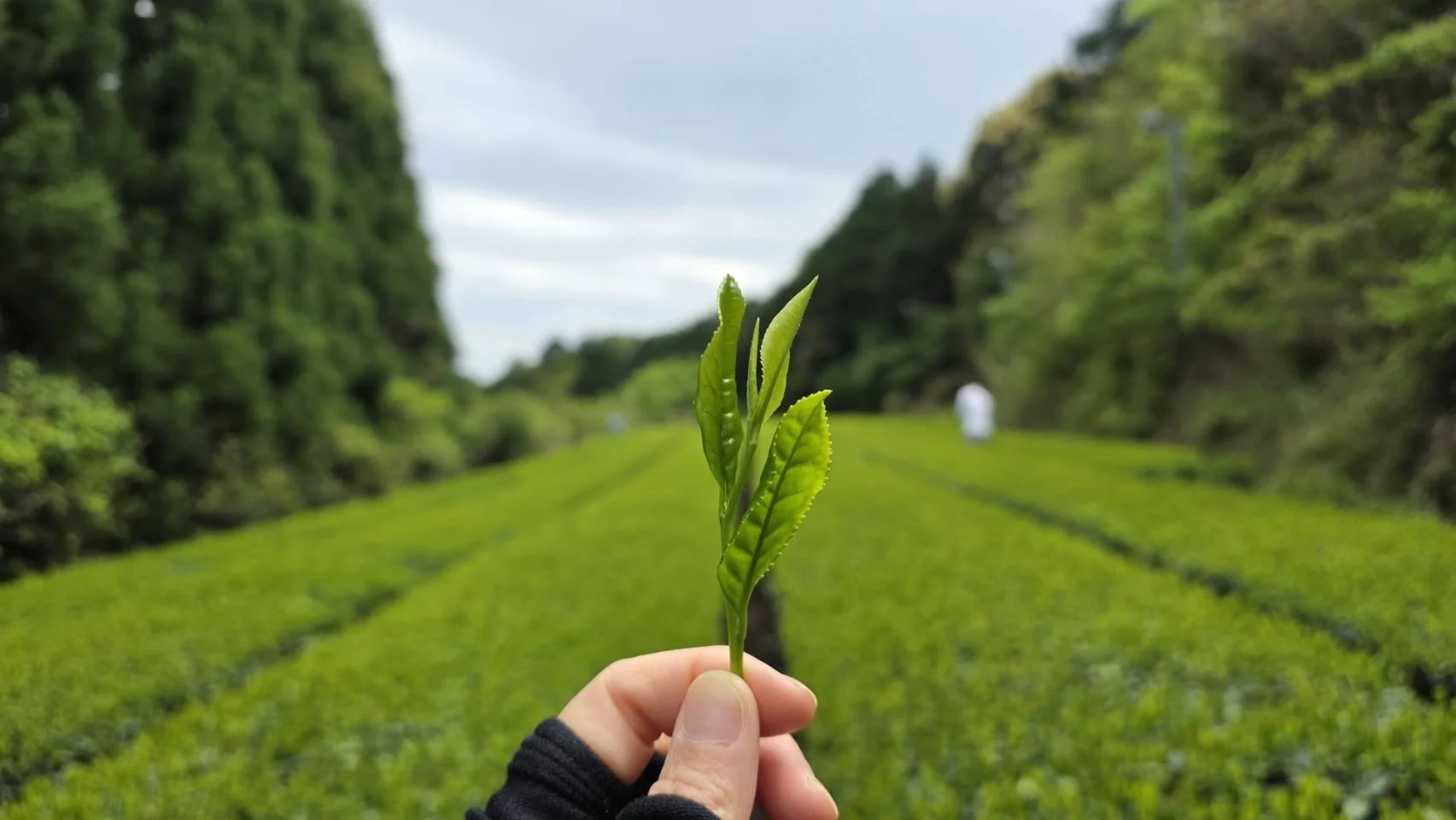
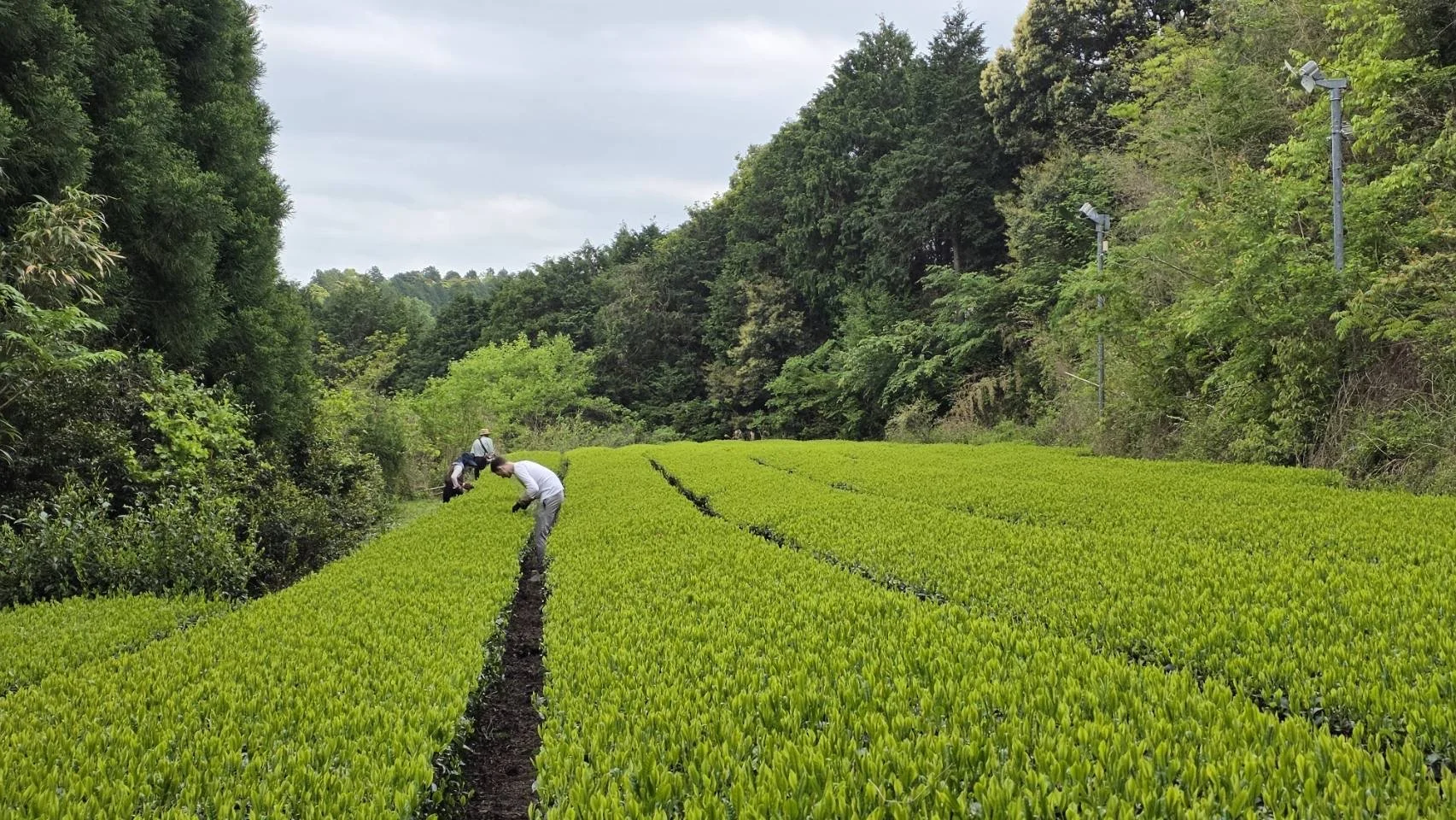
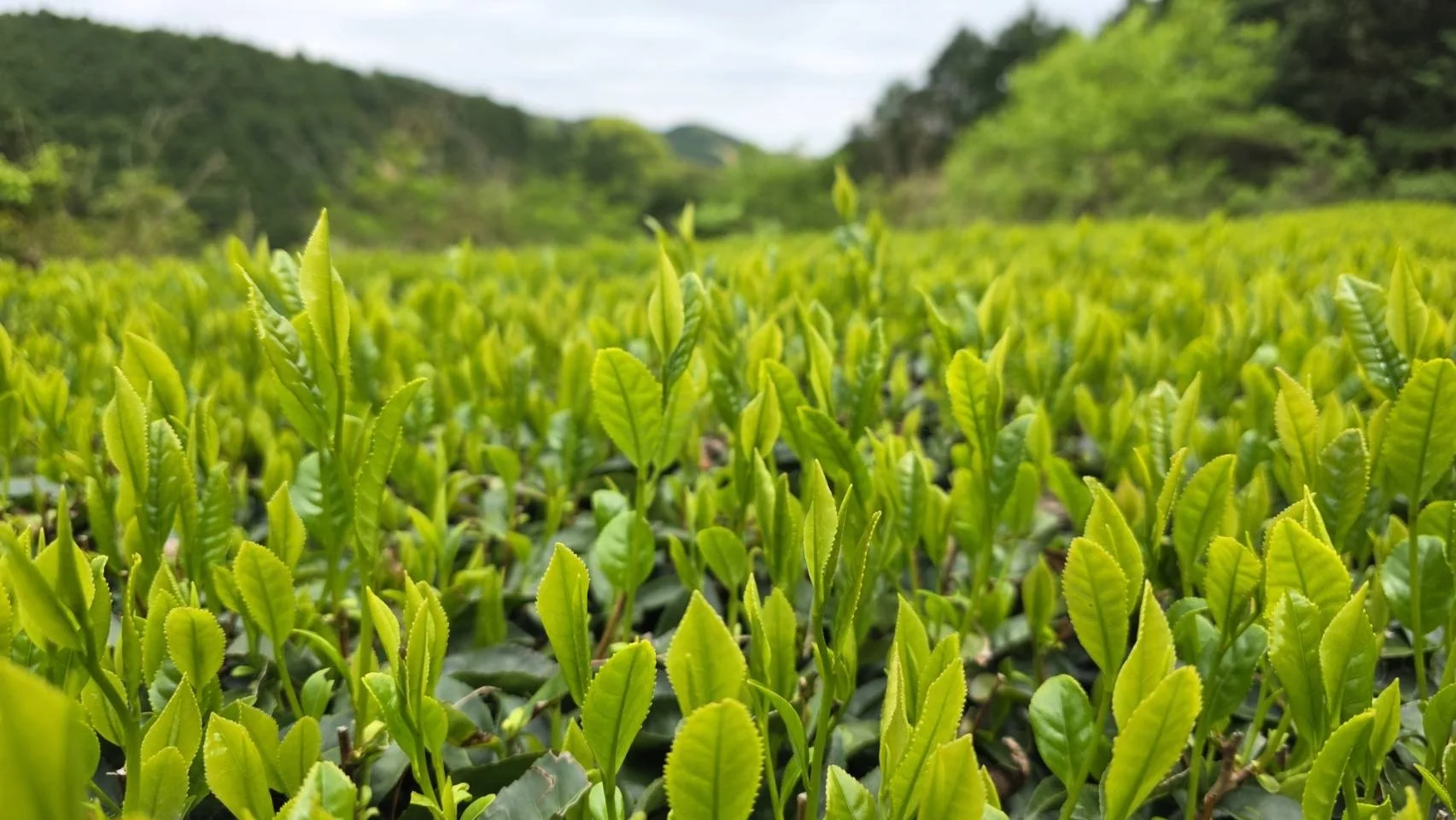
Above you can see some photos of Kuma san’s award winning Saemidori tencha/gyokuro field, taken in person by us across numerous visits to his farm.
In addition, you can also see some photos of the Okumidori tencha field, before being shaded, when being cleaned of weeds, vines, and fallen debris from surrounding trees in April 2026. The trimmed rows of tea plants are directly shaded with kanreisha, and machine harvested. In contrast, the Saemidori photos show shizenshitate (natural growing / non trimmed) tea plants that are non directly shaded and hand picked.
Notes for these particular teas:
The tea was produced in Jouyoumachi, Yame, in Fukuoka prefecture by Kuma san, a third generation tea farmer and producer.
Saemidori (non direct kanreisha shading ~30days, hand picked in spring 2025):
Grown right next to his gyokuro in the award winning field that won first prize with 200/200 marks at the 71st a chahinpyoukai in 2017. The leaves of the gyokuro are non directly shaded with traditional rice straw (honzu saibai), whereas the tencha is non directly shaded with kanreisha (black netting) for around thirty days. Both are hand picked in the first and only harvest of the year. The taste profile is primarily sweet, with a bright and clean umami, and an extremely satisfying lingering sweetness. This is the tencha that is stone ground into Kuma san’s Saemidori Matcha. When directly compared against Kirari31 and Okumidori, the Saemidori tencha had the sweetest and most savoury aroma and flavour.
Kirari31 (direct kanreisha shading ~30days, machine harvest in spring 2025):
Kuma san planted his Kirari31 tea plants across two different fields in 2016 - the same year that Cha-ology was created, so we feel connected to this tea in some way! On one of the fields the tea was directly shaded with kanreisha for around thirty days before harvest, and will not be shaded next year. In the future Kuma san is planning to shade the tea non directly using kanreisha, which means it can be shaded every year without causing the plants too much stress. It was harvest by machine, just one time in the first harvest in spring. Kirari31 is a cultivar born from Saemidori and Sakimidori, and retains the distinct sweetness that is known of Saemidori, with slightly more robust flavour profile overall. We have noticed more and more Kirari31 entries year by year into the National Annual Tea Fair (Zengoku Chahinpyoukai), and the popularity seems to still be growing. In fact, in the 2025 Fukuoka prefecture Chahinpyoukai gyokuro category, the 1st Grade 1st Rank tea was Kirari31! As tencha, the flavour profile is delicate and clean, with a light sweet umami. When directly compared against Saemidori and Okumidori, Kirari31 tencha had the lightest and more delicate flavour and aroma!
Okumidori (direct kanreisha shading ~30days, machine harvest in spring 2024):
Okumidori is a cultivar also growing in popularity recently. It has a deep umami flavour profile along with a distinctly rich and powerful green colour that is very attractive especially when stone ground into matcha. The flavour profile will change drastically depending on the terroir that it is grown in, as well as how the tea is shaded, harvest, and ground. Kuma san’s Okumidori tencha is directly shaded by laying kanreisha (black netting) on top of the tea plants for roughly the last thirty days before harvest, and is machine harvest just once a year in the first harvest in spring. When compared directly against Kuma san’s Saemidori and Kirari31 tencha, the Okumidori was the nuttiest, although with a primarily sweet and vegetal, almost seaweed like, flavour and aroma.
Japanese green tea is best prepared with soft water, to enjoy the complexity of flavour. Please experiment when brewing tea as personal preference plays a large part in brewin. The four variables to test are; amount of tea, amount of water, temperature of water, and duration of each infusion. A good starting point can be found below:
Cold brewing guide:
Tencha 4 grams
Water 300ml @ 5-20°C*
Duration ~16 hours in the fridge
*We find that using room temperature water for cold brewing gives the best flavour, but pre-chilled or ice water works very well too.
Hot brewing guide:
Tencha 3 grams
Water 50ml-100ml depending on intensity preference
First infusion 80°C for 60sec
Second infusion 85°C for 30sec
Third infusion 90°C for 10sec
or
Tencha 3 grams
Water 50ml-100ml depending on intensity preference
First infusion 60°C for 120sec
Second infusion 70°C for 60sec
Third infusion 90°C for 10sec
Since tencha is made up of small flakes of tea leaf that have not been rolled, 3-4 grams will visually look like a lot more tea than 3-4 grams of a rolled tea like sencha/gyokuro. Additionally, the tea leaf flakes are slightly hydrophobic at first and for the first infusion specifically, the tea leaves will take some time to absorb the water and eventually sink in the teapot. This is normal for tencha but may affect how you wish to brew it - maybe lower temperatures for longer durations will give a cleaner and more in depth flavour! Nevertheless, the careful shading before harvest means that the tea can withstand very high temperatures without becoming particularly bitter or astringent, compared to sencha/kabusecha.
Storage:
Store in a cold environment (6-10°C) and avoid exposure to light, air, heat, moisture and strong smells - these will degrade your tea. Once opened, standard loose leaf steamed tea is best consumed within 4-8 weeks, high grade steamed tea like this is best within 4 weeks.