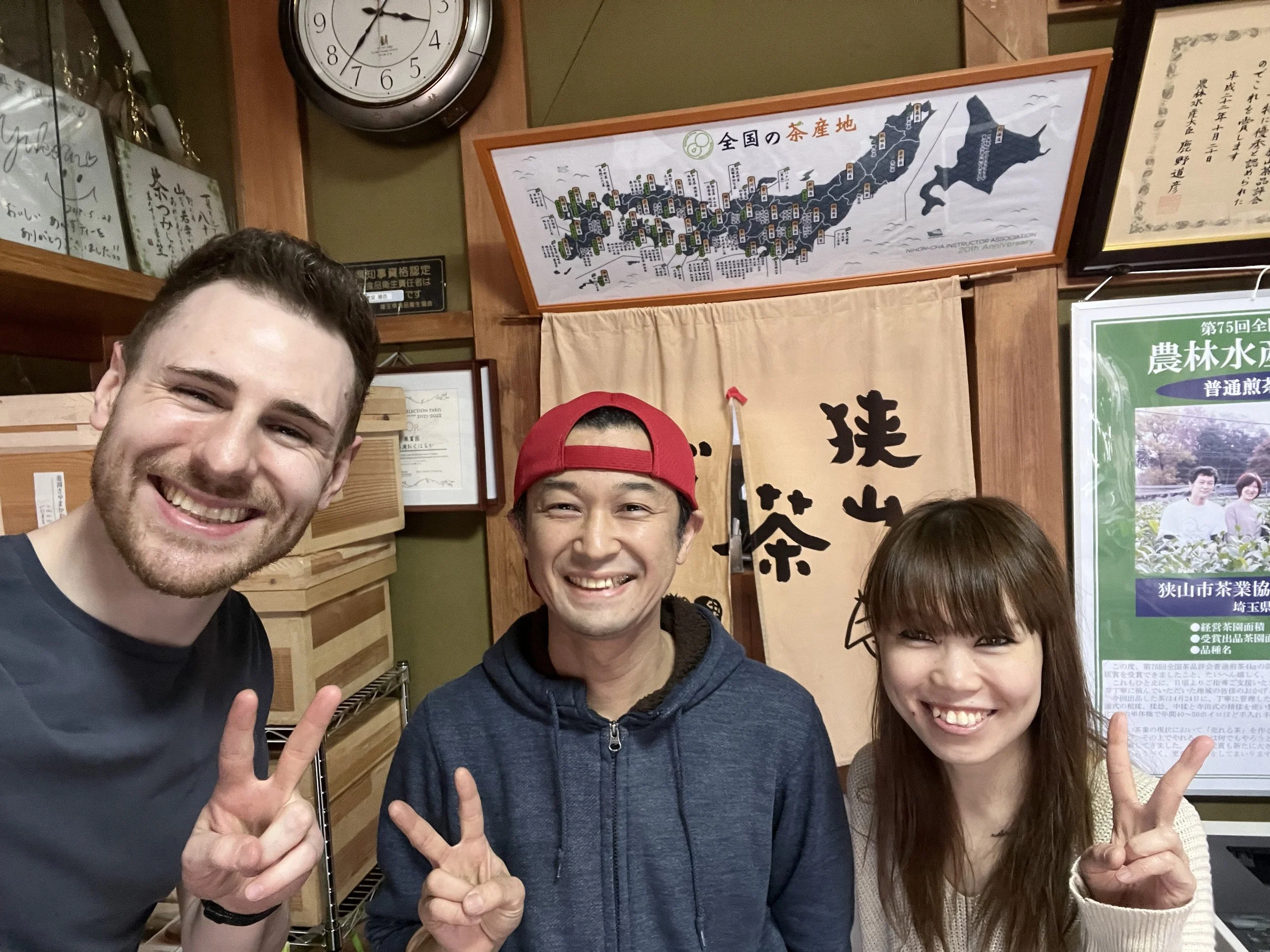
Okutomi san’s Kirari 31 Temomicha

About this type of tea:
Temomicha means hand rolled tea. The leaves were hand picked in Sayama, Saitama from Kirari31 cultivar tea plants in late April. The leaves were lightly steamed, then rolled by hand for 6-7 consecutive hours without any tools or machinery other than 15th generation tea farmer and producer Okutomi san’s hands! Tea processing is done by machine for the vast, vast majority of teas and unfortunately, Temomicha is a dying art form. The rolling process for temomicha is done on a hoiro - a table covered in washi (Japanese paper), with charcoal underneath to heat the table. Sometimes a gas fire is used instead of charcoal. The final tea is incredibly needle like in appearance and when steeped over multiple infusions, you can watch the leaves gradually unfurl in a reversal of the rolling process. This is how all steamed tea was processed in the distant past, but now it is, understandably, one of the rarest forms of tea production. Only around 300g of tea can be processed at one time so we are incredibly grateful that Okutomi san allowed us to reserve so much of this precious tea. Thanks to a small amount of tea producers, through their hard work and dedication to preserve this technique, we can share a rare experience of brewing and drinking temomicha. There are regional and national temomicha competitions held annually, which are separate from the annual chahinpyoukai that you would have heard us talk about in the past, of which temomicha is not a category. In terms of the winning bids for the highest ranking temomicha, the price paid per gram is higher than even the highest ranking gyokuro or tencha at the chahinpyoukai!

Thank you Okutomi san for all your hard work!


You can compare two of Okutomi san’s previous temomicha. Above this text is 2024 Kirari 31 with the white background, and below is the winter release 2023 Yabukita with the brown background.

Here is the recommended brewing guide:
Hot brewing guide:
Temomicha 5 grams
Water 60ml
First infusion 60°C for 90sec
Second infusion 70°C for 60sec
Third infusion 85°C for 20sec
High quality tea leaves like these can be consumed after the final infusion. We usually serve tea leaves with yuzu ponzu, but sea salt, rice, or all of the aforementioned together can be a great way to fully savour this tea.
Storage:
Store in a cold environment (6-10°C). Keeping the tea away from light, air, humidity and strong smells is good practice but since each 5g pack is one serving, the main factor to consider for storage is temperature.